Delicious Recipes That Naturally Support Healthy, Glowing Skin


Most of us have a shelf somewhere crowded with serums, moisturizers, and SPF bottle🧴
We've all spent money chasing that elusive glow.
But here's something a lot of people forget.
Your skin is fed by your bloodstream long before it ever meets a product.
That's not a marketing line. It's basic biology.
Every nutrient you eat eventually makes its way to your skin cells. That's true whether it's the vitamin C in your morning fruit or the omega-3s in your dinner.
This list of recipes for glowing skin isn't about a miracle ingredient or a 3 day fix.
No single smoothie or salad is going to transform your complexion overnight. Honestly, be wary of anything that promises that.
What actually works is consistency.
Eating nutrient-rich meals regularly, over weeks and months, gives your skin the raw materials it needs. That means repairing itself, producing collagen, and defending against everyday stress.
So think of this less as a diet and more as a rotation.
Eight recipes for glowing skin you can genuinely enjoy making, built around real ingredients like berries, salmon, avocado, and leafy greens. 🥑
These are genuinely easy recipes for glowing skin too. Nothing here needs a specialty ingredient or an hour of prep.
We'll walk through two breakfasts, two lunches, two dinners, and two smoothies, all built around foods that support healthy skin.
Along the way, we'll explain why each ingredient matters, without turning this into a chemistry lecture.
If you're already using a solid moisturizer routine or a daily sunscreen, consider this the piece that works alongside it.
Skin health really is a two-way street between what you put on and what you put in.
Let's get cooking.
Why Food Matters for Your Skin (The Short Version)
Your skin is your body's largest organ.
It's also one of the most metabolically demanding, constantly shedding, rebuilding, and defending itself against UV rays, pollution, and general wear and tear.
That process relies on specific nutrients.
Vitamin C, for example, isn't just an antioxidant. It's literally required for your body to build collagen.
Without enough of it, collagen production slows down, no matter how much collagen powder you're stirring into your coffee.
A 2025 study out of the University of Otago found something worth sitting with.
Researchers tracked participants who ate vitamin C-rich kiwifruit daily for eight weeks. They measured real, physical increases in skin thickness and collagen renewal.
The takeaway wasn't subtle.
Skin vitamin C levels tracked almost exactly with blood levels, meaning what you eat shows up in your skin fairly directly. It's one of the clearer examples of collagen-boosting foods actually being backed by data, not just marketing.
This is really the whole idea behind foods for glowing skin as a category.
It's not one superfood doing all the work. It's a handful of nutrients showing up consistently across a balanced diet.
Omega-3 fatty acids play a different role.
They help maintain your skin barrier, the outer layer that keeps moisture in and irritants out. They also calm the kind of low-grade inflammation that shows up as dullness, redness, or breakouts.
Then there are antioxidants like lycopene, found in tomatoes, along with the ones packed into berries and leafy greens.
These help neutralize oxidative stress, the cellular damage caused by sun exposure, pollution, and just normal aging.
None of this means food replaces skincare. It means food is part of the same system.
Alright, onto the recipes.
Breakfast Recipes for Healthy, Glowing Skin
Breakfast sets the tone for the day.
It's an easy place to sneak in some of the most skin-supportive foods around.
These two breakfast recipes for healthy skin lean on Greek yogurt, berries, eggs, and healthy fats.
1. Greek Yogurt Berry and Walnut Parfait
This one takes about five minutes and doesn't require any actual cooking.
That makes it perfect for busy mornings.
Greek yogurt brings protein and probiotics to the table, and there's growing interest in how gut health connects to skin clarity.
Layer that with berries for antioxidants and walnuts for a dose of plant-based omega-3s, and you've got a genuinely nutrient-rich meal.

Ingredients
1 cup plain Greek yogurt (full fat or 2%)
3/4 cup mixed berries (blueberries, raspberries, strawberries)
2 tablespoons chopped walnuts
1 tablespoon chia seeds
1 teaspoon raw honey
A pinch of cinnamon
Instructions
Spoon a third of the yogurt into a glass or bowl.
Add a layer of berries, then a sprinkle of chia seeds.
Repeat the layers twice more, finishing with berries on top.
Scatter the walnuts over the top and drizzle with honey.
Dust with cinnamon and serve immediately.
✨ Why Your Skin Loves It
Berries are loaded with antioxidants that help fight oxidative stress, the kind of cellular damage that speeds up visible aging.
Walnuts contribute alpha-linolenic acid, a plant form of omega-3 that supports your skin barrier.
And the probiotics in Greek yogurt may help calm inflammation that often shows up on the surface as redness or breakouts. 🍓
2. Spinach, Tomato and Avocado Egg Scramble
If you want something warm and savory, this scramble is where a lot of the classic skin-boosting foods overlap in one pan.
Spinach, tomatoes, and avocado together cover vitamin C, lycopene, and healthy fats in a single dish.

Ingredients
3 large eggs
1 cup fresh spinach, roughly chopped
1/2 cup cherry tomatoes, halved
1/2 avocado, sliced
1 teaspoon olive oil
Salt and black pepper to taste
A squeeze of fresh lemon
Instructions
Heat the olive oil in a nonstick pan over medium heat.
Add the cherry tomatoes and cook for 2 minutes, until they start to soften.
Stir in the spinach and cook until just wilted, about a minute.
Whisk the eggs and pour them into the pan.
Gently scramble until just set, then season with salt and pepper.
Top with avocado slices and a squeeze of lemon before serving.
✨ Why Your Skin Loves It
Spinach delivers vitamin C along with iron and vitamin A, all of which play a role in skin repair and collagen support.
Tomatoes bring lycopene, an antioxidant that research has linked to better protection against UV-related skin damage.
Avocado rounds it out with monounsaturated fats and vitamin E, which help keep your skin barrier soft and resilient.
Lunch Recipes for Glowing Skin
Midday meals are where it's easy to slip into something quick but nutritionally empty.
These two lunch recipes for glowing skin are built to be just as fast as takeout, minus the crash an hour later.
3. Citrus Quinoa and Chickpea Salad
This salad leans hard on vitamin C from citrus and fiber from quinoa and chickpeas, with pumpkin seeds thrown in for a bit of crunch and zinc.
If you make grain bowls often, a decent rice cooker takes a lot of the guesswork out of quinoa. It's easy to end up with something mushy or undercooked on the stovetop.
We've been using the Panasonic SR-WA22H for this, and it handles quinoa just as well as rice, with an auto switch off so you're not hovering over a pot.

You definitely don't NEED a fancy rice cooker to make this dish though, and it can still turn out pretty good!

Ingredients
1 cup cooked quinoa, cooled
1 cup canned chickpeas, drained and rinsed
2 cups arugula
1 orange, segmented
2 tablespoons pumpkin seeds
2 tablespoons fresh orange juice
1 tablespoon fresh lemon juice
2 tablespoons olive oil
Salt and pepper to taste
Instructions
In a large bowl, combine the quinoa, chickpeas, and arugula.
Whisk together the orange juice, lemon juice, olive oil, salt, and pepper.
Pour the dressing over the salad and toss well.
Fold in the orange segments gently, so they don't break apart.
Top with pumpkin seeds just before serving.
✨ Why Your Skin Loves It
Citrus fruit is one of the most concentrated everyday sources of vitamin C, which your body needs to actually assemble collagen fibers.
Chickpeas add plant protein, another building block for skin repair, while pumpkin seeds contribute zinc, a mineral involved in wound healing and oil regulation.
This is a genuinely easy recipe for glowing skin to prep in bulk for the week. 🍊
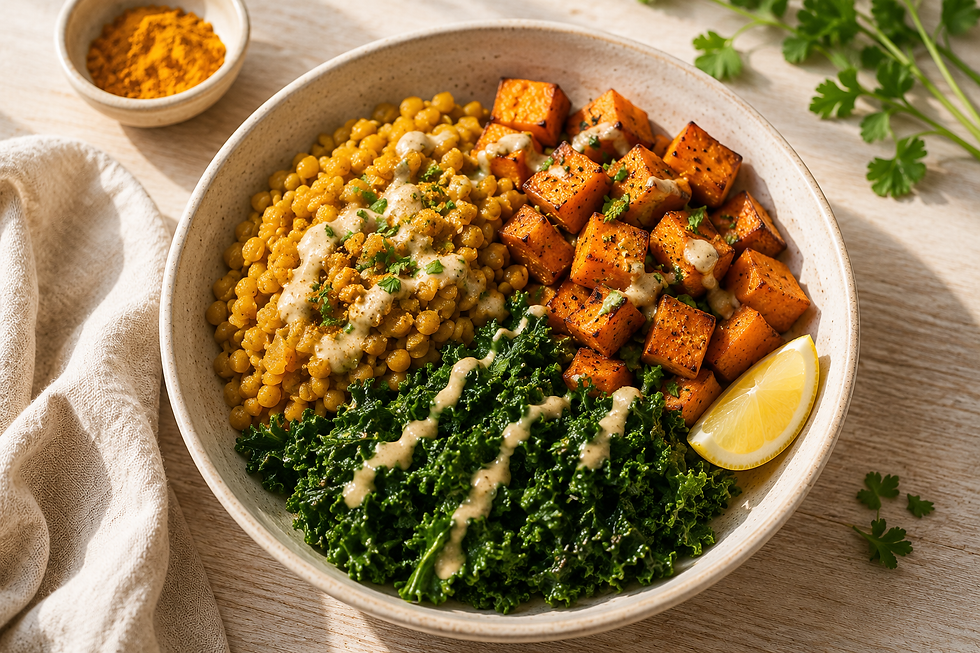
4. Turmeric Lentil and Sweet Potato Bowl
This one's warm, a little spiced, and quietly does a lot of anti-inflammatory work.
Lentils and sweet potato make it filling, while turmeric adds a compound called curcumin that's been studied for its role in calming inflammation.
Since this is the kind of recipe that's genuinely better the next day, it's worth having a set of glass meal prep containers around if you don't already.
We like the Allo Foodsafe glass containers for this specifically. Glass holds up better than plastic against turmeric staining, and the airtight lids mean you can reheat straight in the container without transferring anything.

Ingredients
1 cup cooked green or brown lentils
1 medium sweet potato, cubed and roasted
1 cup kale, stems removed and chopped
1 teaspoon ground turmeric
1/2 teaspoon cumin
1 tablespoon tahini
1 tablespoon lemon juice
2 tablespoons olive oil
Salt to taste
Instructions
Toss the sweet potato cubes with 1 tablespoon olive oil, turmeric, cumin, and salt.
Roast at 400°F for 20 to 25 minutes, until tender and slightly caramelized.
Massage the kale with a small amount of olive oil to soften it.
Whisk the tahini, lemon juice, and remaining olive oil into a simple dressing.
Assemble the bowl with lentils, roasted sweet potato, and kale.
Drizzle with tahini dressing and serve warm.
✨ Why Your Skin Loves It
Sweet potato is rich in beta carotene, which your body converts to vitamin A, a nutrient closely tied to skin cell turnover.
Turmeric's curcumin has anti-inflammatory properties that may help with skin conditions linked to chronic low-grade inflammation.
Kale adds another round of vitamin C and antioxidants on top of that.
Dinner Recipes for Healthy Skin
Dinner is where a lot of the heavy hitters for skin health show up, particularly omega-3-rich fish.
These two dinner recipes for healthy skin are simple enough for a weeknight but feel a little more special than a typical meal.
5. Herb-Baked Salmon with Roasted Tomatoes and Asparagus
Salmon might be the single most talked-about food for glowing skin, and for good reason.
It's one of the richest everyday sources of omega-3 fatty acids, which support your skin barrier and help calm inflammation.
Getting salmon right comes down to not overcooking it. That's genuinely one of the few places where a cheap instant-read thermometer changes the outcome.
We use the ThermoPro TP-02S for this, since its long probe reaches the center of a thick fillet without you having to cut into it to check.
Pull it at 125 to 130°F for a moist, flaky center instead of guessing and ending up with a dry fillet.

A meat thermometer is convenient, but honestly, if probably don't need it if you're an experienced cook.

Ingredients
2 salmon fillets (about 6 oz each)
1 cup cherry tomatoes
1 bunch asparagus, trimmed
2 tablespoons olive oil
1 clove garlic, minced
1 tablespoon chopped fresh dill or parsley
1 lemon, sliced
Salt and pepper to taste
Instructions
Preheat the oven to 400°F and line a baking sheet with parchment.
Arrange the salmon, tomatoes, and asparagus on the sheet.
Drizzle everything with olive oil and scatter the garlic on top.
Season with salt and pepper, then lay lemon slices over the salmon.
Bake for 12 to 15 minutes, until the salmon flakes easily.
Finish with fresh dill or parsley before serving.
✨ Why Your Skin Loves It
Salmon's omega-3 content, specifically EPA and DHA, has been linked in research to better skin barrier function and reduced inflammation, the kind that can show up as redness or sensitivity.
Roasted tomatoes bring lycopene into the mix, an antioxidant studied for helping protect skin against UV-related damage.
Asparagus adds a smaller boost of vitamin C and folate on the side.
6. Ginger Turkey and Rainbow Vegetable Stir-Fry
This stir-fry is colorful almost by accident.
Bell peppers, carrots, and broccoli each bring their own antioxidants to the pan, and ginger adds warmth along with its own anti-inflammatory reputation.
It also comes together fast once everything's chopped. That makes it one of the easier anti-inflammatory recipes for skin to slot into a weeknight without much planning.

Ingredients
1 lb ground turkey (or extra-firm tofu, cubed)
1 red bell pepper, sliced
1 yellow bell pepper, sliced
1 cup broccoli florets
1 carrot, julienned
1 tablespoon fresh ginger, minced
2 cloves garlic, minced
2 tablespoons low-sodium soy sauce or tamari
1 tablespoon sesame oil
1 tablespoon sesame seeds
2 green onions, sliced
Instructions
Heat sesame oil in a large skillet or wok over medium-high heat.
Add the turkey and cook until browned, breaking it up as it cooks.
Push the turkey to one side and add ginger and garlic to the empty space, stirring for 30 seconds.
Add the bell peppers, broccoli, and carrot, stirring everything together.
Cook for 5 to 6 minutes, until the vegetables are crisp-tender.
Stir in the soy sauce, then top with sesame seeds and green onions.
✨ Why Your Skin Loves It
Bell peppers are actually one of the highest vitamin C foods you can eat, often surpassing citrus per serving, which supports collagen production directly.
Broccoli and carrots add their own antioxidants and beta carotene, while ginger has a long history in traditional diets tied to reducing inflammation.
Sesame seeds bring a small dose of healthy fats and minerals to close out the dish. 🌶️
Smoothies for Glowing Skin
Smoothies are honestly the easiest entry point into any of this.
You can pack an enormous amount of nutrients into one glass, and these two smoothies for glowing skin are built to actually taste good, not just be good for you.
If you're going to make smoothies a regular habit, a decent blender is worth the investment.
It doesn't need to be an expensive commercial model.
We've found the NutriPro Juicer Mixer Grinder, with its 500-watt motor and extra jars, to be compact and genuinely powerful for its size.
It's just as useful for these antioxidant-rich recipes as it is for protein shakes or the occasional soup.

7. Berry Collagen Glow Smoothie
This smoothie combines berries, flaxseed, and Greek yogurt for a genuinely well-rounded skin-supportive drink.
If you already use a collagen peptide supplement, it blends into this one without changing the flavor much.

Ingredients
1 cup mixed frozen berries
1/2 cup plain Greek yogurt
1 tablespoon ground flaxseed
1 scoop collagen peptides (optional)
3/4 cup unsweetened almond milk
1 teaspoon honey (optional)
Instructions
Add all ingredients to a blender.
Blend on high for 45 to 60 seconds, until smooth.
Add more almond milk if you prefer a thinner consistency.
Pour into a glass and serve immediately.
✨ Why Your Skin Loves It
Berries are one of the most concentrated everyday antioxidant sources, helping counter oxidative stress from sun and pollution.
Flaxseed contributes plant-based omega-3s and lignans, while Greek yogurt adds protein your skin needs for repair.
If you add collagen peptides, the vitamin C from the berries actually helps your body use that collagen more effectively. 🍓
8. Tropical Avocado Green Smoothie
This is the smoothie for people who insist they don't like green smoothies.
The avocado makes it genuinely creamy, and the mango or pineapple hides the spinach almost completely.

Ingredients
1/2 avocado
1 cup frozen mango or pineapple chunks
1 cup fresh spinach
1 tablespoon chia seeds
3/4 cup coconut water
Juice of 1/2 lime
Instructions
Combine all ingredients in a blender.
Blend until completely smooth, about 60 seconds.
Taste and add a bit more lime if you want extra brightness.
Serve chilled, ideally right after blending.
✨ Why Your Skin Loves It
Avocado provides monounsaturated fats and vitamin E, both of which help maintain a soft, resilient skin barrier.
Spinach sneaks in vitamin C and folate without changing the flavor much at all.
Coconut water and chia seeds both support hydration, which matters more for skin plumpness than people tend to realize. 🥭
Frequently Asked Questions
What foods help your skin glow naturally?
Foods rich in vitamin C (citrus, bell peppers, berries), omega-3 fatty acids (salmon, walnuts, flaxseed), and antioxidants (leafy greens, tomatoes) tend to make the biggest difference.
Hydrating foods and healthy fats matter too, since skin needs both moisture and structural fat to look plump rather than dull.
Can smoothies improve your skin?
Smoothies can absolutely be some of the easiest recipes for glowing skin to stick with. They're fast and let you combine several skin-supportive ingredients in one glass.
They're not a magic fix, but a daily smoothie built around berries, greens, or avocado adds up over time.
How long does a diet take to affect the skin?
Most research suggests you're looking at somewhere around 4 to 8 weeks of consistent eating before changes become noticeable, since skin cells turn over on their own cycle.
Some people notice a difference sooner, especially with hydration and puffiness, but collagen-related changes take longer.
Which fruits are best for healthy skin?
Citrus fruits, berries, kiwifruit, and tomatoes (technically a fruit) tend to top the list, mostly because of their vitamin C and antioxidant content.
Kiwifruit in particular has shown up in recent skin research for its impact on collagen production.
What foods should I avoid for clearer skin?
Highly processed foods, excess added sugar, and refined carbohydrates are generally the ones associated with more breakouts and inflammation, at least for people prone to acne.
That doesn't mean cutting them out entirely, just not letting them crowd out the more nutrient-dense stuff.
Bringing It All Together
None of these eight recipes is going to change your skin by itself.
That's just not how nutrition works, and anyone promising an overnight glow is stretching the truth a bit.
What they can do is become part of a rhythm.
A parfait a few mornings a week, a salmon dinner on a night you'd normally order in, a smoothie instead of skipping breakfast entirely.
Pair that with the basics you probably already know matter: drinking enough water, getting decent sleep, and staying consistent with whatever skincare routine actually works for you.
Glowing skin was never really about one recipe or one product.
It's about showing up for your body regularly, in small, doable ways, and letting that add up over time. 🥗

Wanna include more protein in your diet?
We have a blog on many recipes that will empty your protein powder jar!


Comments